



Celebrating Renton’s 125 years invites us to reflect on our past and the innovations that shaped the city we know today. If you’ve spent any time in Renton and looked up, you’ve almost certainly seen a plane—whether from the regional SeaTac Airport or from Renton’s own municipal airport. From Boeing aircrafts soaring overhead to Northwest Seaplanes offering new perspectives of our region, aviation has long been part of Renton’s skyline. This story explores how aerospace became such a defining industry in Renton and how the city’s spirit of innovation took flight.
All historical information included in this story has been summarized from previously published materials and verified accounts provided by the City of Renton, Renton Historical Society and Boeing. This story does not claim original authorship of these historical narratives and acknowledges the contributions of these organizations in preserving and sharing Renton’s history.
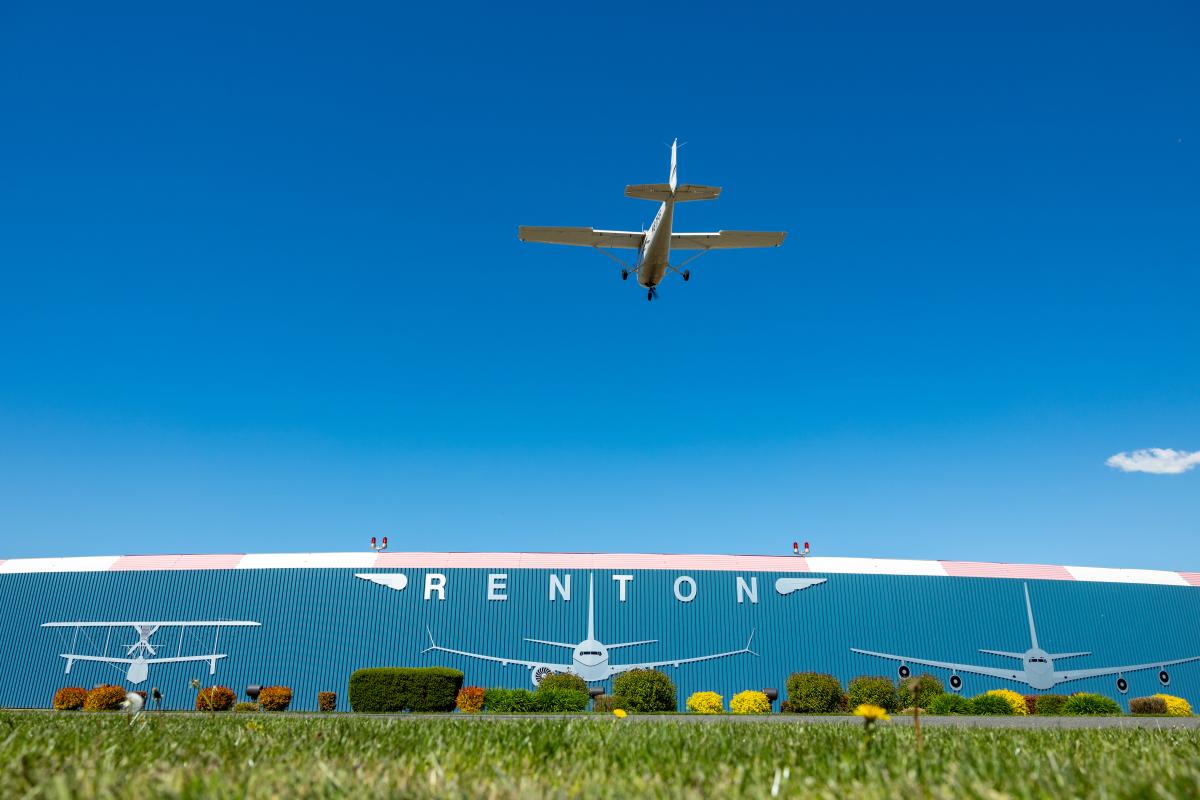
Early Innovation and Air Travel
Renton’s early connection to aviation began with the privately owned Bryn Mawr airstrip. The City of Renton’s timeline highlights: "In 1935, nationally renowned humorist Will Rogers and famed pilot Wiley Post landed their seaplane here—their last stop before both tragically perished in a crash in Alaska. In their honor, the Will Rogers–Wiley Post Memorial Seaplane Base was later established at the Renton Airport. In 1947 the City of Renton purchased the Renton Airport from the federal government for just $1. Clayton Scott, a prominent figure in Renton’s aviation community, ran the Jobmaster Company, which specialized in modifying floats for various types of aircraft. The airport was renamed Clayton Scott Field in 2005 to celebrate the 100th birthday of Clayton Scott."
Aerospace
World War II brought new demands across the globe, especially for manufacturing and production. According to Boeing’s timeline, “in 1941, Boeing announces that the U.S. Navy has selected the small town of Renton, Washington, on Lake Washington, as the new manufacturing facility for Model 344 XPBB‑1 Sea Ranger flying boats. It will take more than 450,000 yards of fill to reclaim the wetlands.” This moment marked the beginning of Renton’s long and influential relationship with the aerospace industry.
The City of Renton’s timeline highlights just how transformative this period was: “Renton’s population quadrupled from 1940 to 1945, and the city jumped from a fourth‑class city to a second‑class city almost overnight. When the Boeing Company came to town in 1941 to build planes for the war effort, $4 million in federal money came with it for housing and street improvements. This money was designed to meet the demands of a four-fold population expansion. This reality created both exhilaration and problems for the townsfolk already here.”
Boeing’s arrival transformed Renton’s economy, shifting its focus toward aerospace and dramatically expanding its workforce. The city continued to grow even after the war, driven in part by Boeing’s ongoing presence as a top employer.
At the same time, innovation in Renton was about to change commercial aviation worldwide. As the City of Renton notes, “While jet airplanes were already widely used in the military, Boeing introduced a new airplane, the Dash‑80, the first commercial jet‑powered (rather than propeller driven) airplane in the world. The gamble worked; the Boeing Company produced its first 707 in 1958, signaling the beginning of commercial jet aviation worldwide. The plane manufacturer invested some of its earnings in expanding and upgrading the local airport. Renton became ‘Jet City,’ the birthplace of commercial jet aviation.”
The Renton Historical Society further emphasizes Boeing’s continued importance to Renton’s growth: “Renton experienced considerable growth in the 1990s. Boeing’s aircraft manufacturing plant in Renton continued to play a major role in the city’s economy due to the production of its 737 aircraft which contributed significantly to Renton’s economy during the decade.”
A Changing City
While Boeing anchored Renton’s industrial identity, the city evolved. As described by the Renton Historical Society, Renton transitioned from a primarily industrial community to a diverse and growing suburb. Investments in housing, transportation, and quality of life welcomed people from a wide range of backgrounds and cultures, shaping the vibrant community seen today. Boeing’s detailed chronology highlights this evolution—from a wartime production center to a major commercial aircraft hub—mirroring Renton’s transformation over the decades.
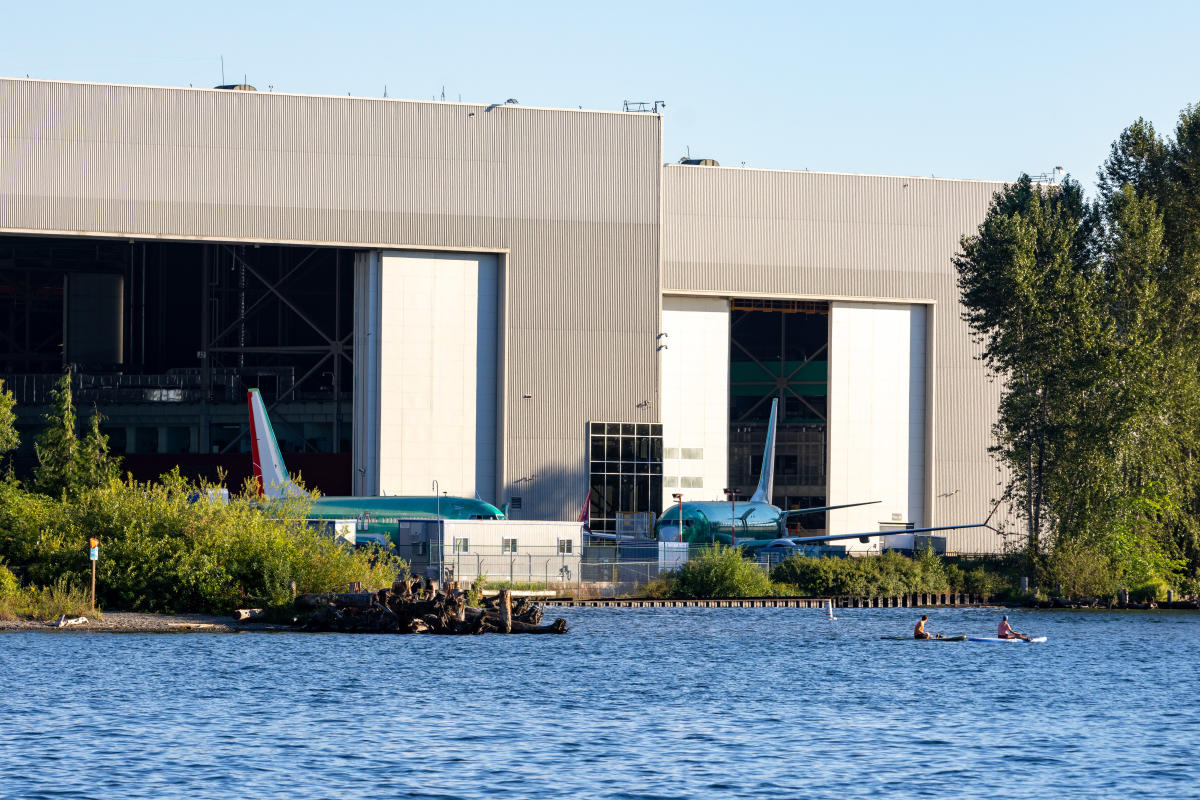
Today, while you can’t physically tour the Boeing facility, it remains one of the most unique sights in Renton. Being near the lake and watching planes being assembled, tested, or taking off is a signature Renton experience. Northwest Seaplanes adds to that vibrancy, offering scenic flights that let people see our region from entirely new heights. And of course, Renton’s 737 program has had an enormous impact on global travel. The 737 plane helped make air travel more accessible, more affordable, and more frequent—connecting people, economies, and cultures around the world. Its presence in Renton ties the city directly to the everyday movement of millions of passengers.
As Renton celebrates 125 years, its story is one of innovation, resilience, and community—rooted in the work of generations who built, imagined, and looked toward the future.
Before European settlement, the Coast Salish peoples lived throughout the Pacific Northwest since time immemorial. The dxʷdəwʔabš (Duwamish) are the Indigenous people who inhabited the area now known as Renton. While this story focuses primarily on industrial innovation, we respectfully acknowledge the First Peoples of this region and the invaluable contributions the Coast Salish people have made—and continue to make—to innovation, culture, and the Renton community.